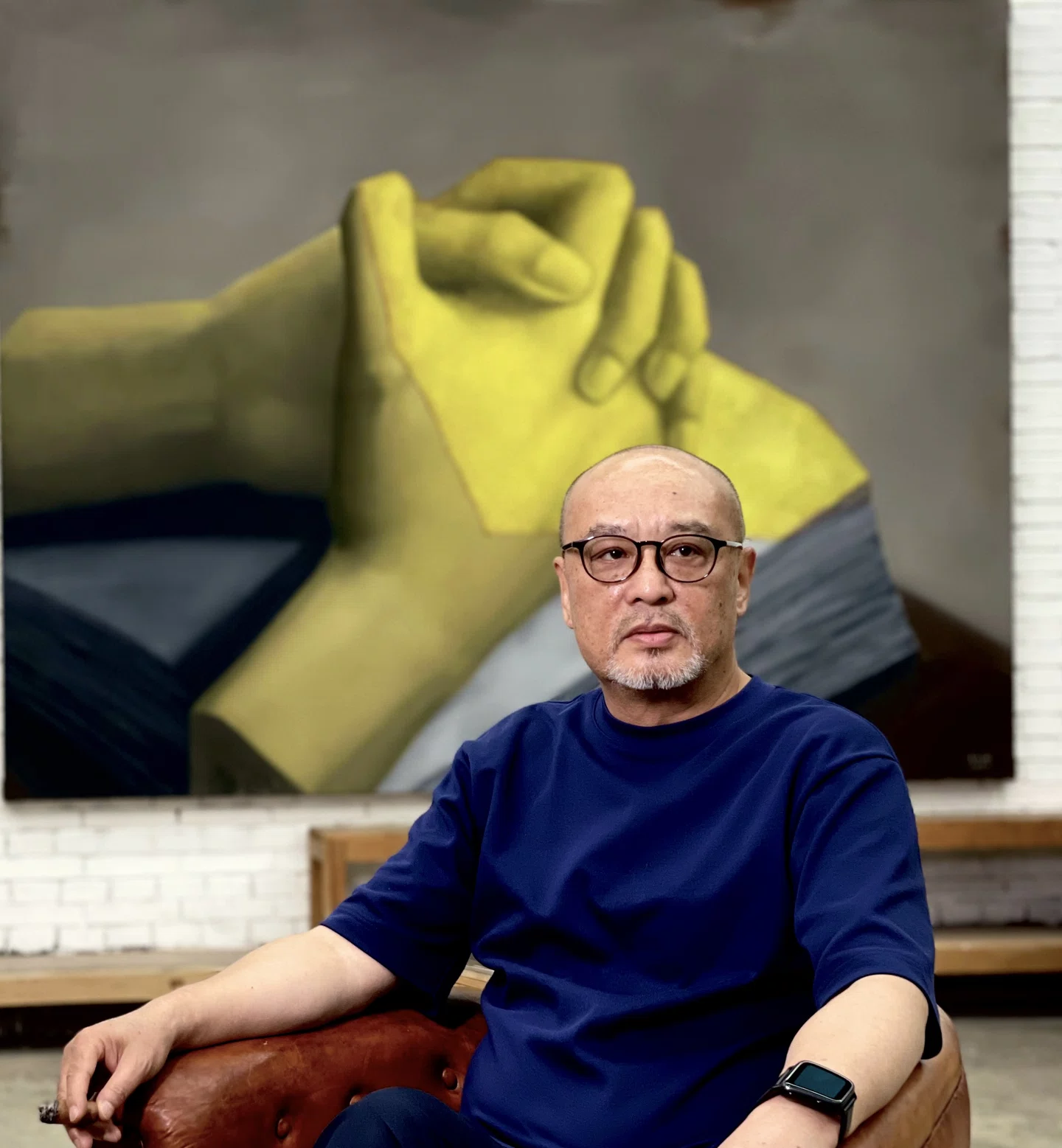
Zhang Xiaogang
Zhang came to prominence in the 1990s amid a new generation of artists known as the 85 New Wave, a movement that proposed a radical break from the predominance of Socialist Realism. Zhang built his early practice upon his interests in Western innovations of modern and postmodern painting and theory, producing a unique aesthetic vocabulary through which he explores complex themes based on personal and collective experience. Intent on pursuing an artistic career, Zhang attended the Sichuan Fine Arts Institute, Chongqing, from 1977 through 1982. Although the institute’s program adhered to Socialist Realism, Zhang’s studies coincided with the end of the Cultural Revolution, giving him gradual exposure to Impressionism and Expressionism. He became particularly influenced by Vincent van Gogh, whose work informed his production of expressionistic paintings; however, this style was not readily accepted among Zhang’s teachers and he was denied graduation until art critic and curator Li Xianting intervened with his support. Met with an institutional resistance toward modern art, Zhang initially made concessions in his work, tempering his expressionist style with bucolic subject matter in order to participate in the Advancing Chinese Youth Fine Arts Exhibition at The National Art Museum of China, Beijing (1984). Zhang became increasingly interested in Western art and philosophy as his work revealed a Surrealist influence in the form of skeletal figures and disembodied heads. He also began to experiment with media by spraying, scraping, and rubbing paint on cardboard, first seen in his Lost Dreams series (1986–1988).